Insitu Injections of Hydrogen Gas in the Opalinus Clay
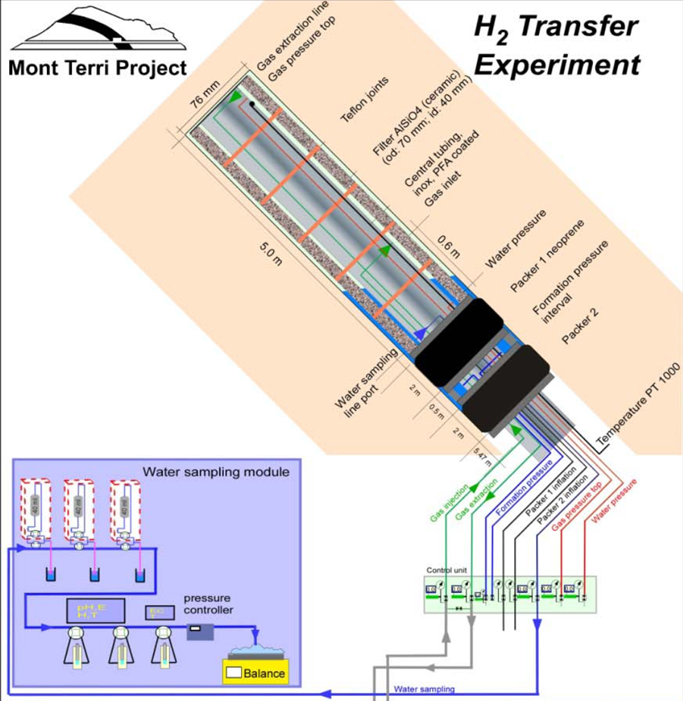
Steel components are generally used in the design of deep geological repositories for high-level radioactive waste. After closure of the underground disposal gal- leries, anoxic corrosion of steel is expected to produce hydrogen gas. Studies are performed to evaluate what will happen to this hydrogen in an underground reposi- tory. Among these studies is the “Hydrogen Transfer” (HT) experiment, which was implemented in 2009 in the Mont Terri Rock Laboratory to study in-situ the diffusion of hydrogen in Opalinus Clay. A second objective of this experiment was to evaluate whether hydrogen could be consumed by chemical reactions with the rock.
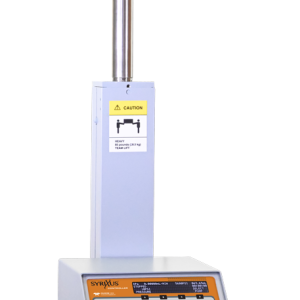
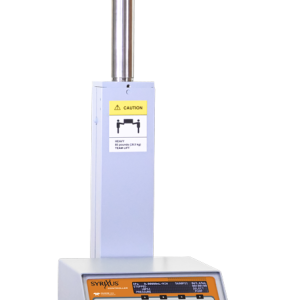
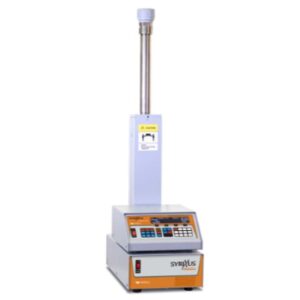
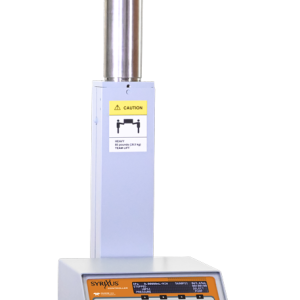
Pure hydrogen was added into the main gas flow cir- cuit loop of the experiment using a Teledyne Isco 500D syringe pump. The Solexperts dosage, control and moni- toring software (DCAM) was used to control the pump injection rate, to perform automatic pump refills, to monitor test parameters, and to display real-time values and graphics.